
A winning team starts with knowing what each person needs to win.
When you take over a team, launch a cross-border project, or scale past the founding stage - the technical side is clear. Roles defined. Milestones agreed. Terms are signed. But nobody maps what each person actually needs to perform at their best in this team.
What drives them vs drains them. What makes them trust or withdraw.
What Drives Them (Individual Wins)
What gives them energy at work
What success looks like to them
What recognition they actually want
What makes them go the extra mile
What breaks trust (conflict Triggers)
What behaviour they can't tolerate in others
What behaviour they misread as disrespect
What their strengths look like when overdone
What makes them withdraw instead of speak up
How to Work Together (Team Dynamics)
Their non-negotiable trust makers
Where assumptions replace actual conversations
Who needs what from whom to collaborate
What "support" actually means to each of them
Leaders who see this have a different advantage. Not just managing output — but understanding what each person needs to perform at their best. That's what turns a group of talented people into a team that actually wins together.
Why SDI 2.0 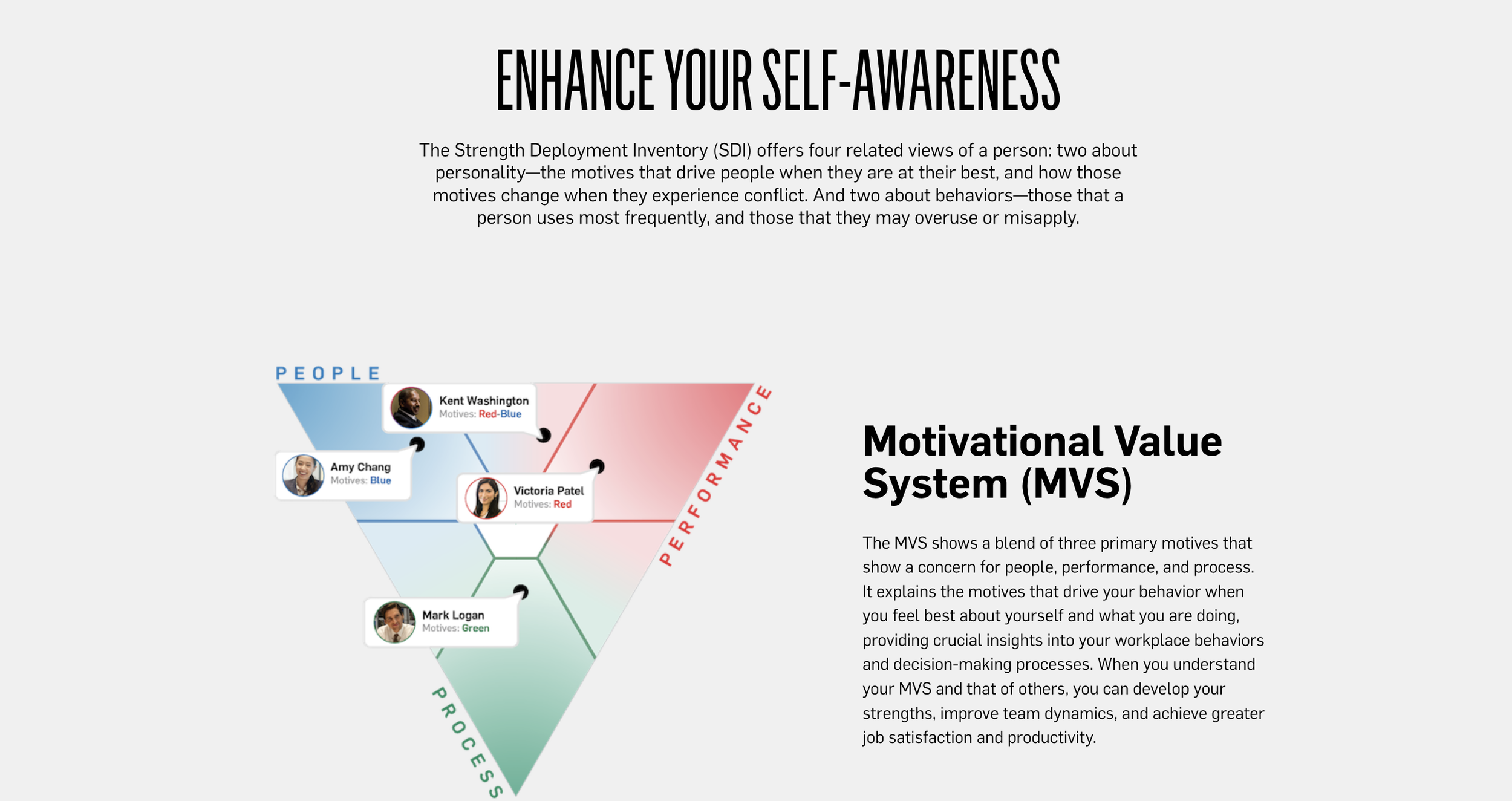
Motivational Value System (MVS)
Every person on your team is driven by a different blend of three motives: concern for people, performance, and process. The MVS shows you that blend — what drives each person when they're at their best and how it shapes the way they work and make decisions. When you know what motivates each person, you stop guessing and start leading in a way that actually lands.
❋Motivation is MeasurableNot guesswork. Each person's drivers are mapped — what gives them energy, what drains it, what recognition actually lands. You lead with data, not assumptions
❋Relationships Are VisibleTwo people can be talented individually and struggle together. You'll see exactly where colleagues clash, who needs what from whom, and which dynamics are costing you momentum.
Why SDI 2.0 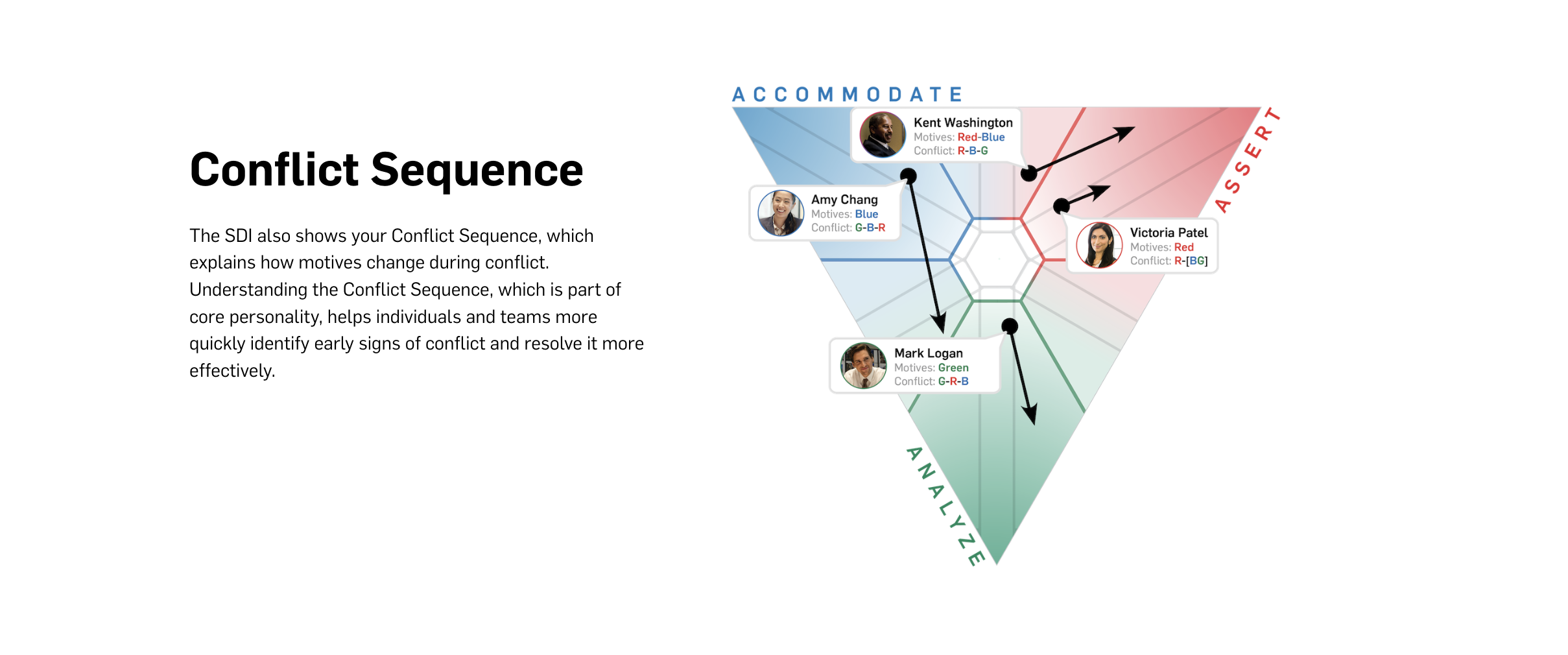
The SDI also maps how each person's motives shift during conflict. People don't stay the same under pressure — what drives them changes, and it changes in a predictable sequence. When you can see that sequence for each team member, you catch friction earlier and deal with it before it derails the work.
❋ Conflict Has a PatternPeople don't blow up randomly. Under pressure, everyone shifts in predictable ways. When you see the pattern, you catch tension before it derails the project.
❋ Strengths BackfireEvery strength has an overdone side. Confidence tips into arrogance. Flexibility into indecision. You'll see who's close to the edge before it costs you.
Why SDI 2.0 
Strengths Portrait
The Strengths Portrait ranks the behaviors each person is most likely to use at work — how they naturally approach tasks and relationships. It also shows which strengths they can access but don't default to. That's where the coaching opportunity is: helping people use more of what they already have.
Why SDI 2.0 
Overdone Strengths
The Overdone Strengths Portrait shows the behaviors most likely to be overused or misapplied — the ones that create friction and slow the team down. When people can see their own patterns, they adapt faster and the working relationships improve. As a leader, this is the data that helps you have the conversations that actually matter.
PLACE HOLDERI use SDI 2.0 because it starts with each person's self-worth, then maps how they work together.
What each person needs to trust - and what breaks it
How strengths become liabilities under pressure
Where two people will clash before they know it themselves
What drives motivation - not just behaviour
This gives you the relational map right when you need it. You know what to do next - which conversations to have, where to invest your attention, and how to keep your team aligned before pressure tests it. Lead ahead of the problem, not behind it.
Strengths Deployment Inventory (SDI) 2.0 grounded in 50+ years of research and still advancing.
What to know before getting started
Not sure where to start? Reach out with any questions, or if you're ready to dive right in, schedule a free consultation today.
-
Most assessments label people and stop there. SDI 2.0 shows what each person values about themselves, what they need from others to trust, and how their motivation shifts under pressure. It also maps how to make different people work together - respecting differences, regardless of cultural heritage. It's not about putting people in boxes. It's about seeing what makes collaboration actually work.
-
Yes. Each person completes SDI 2.0 individually - it takes about 30 minutes. But the real shift happens after: each team member sees how others are wired, rethinks their perceptions, and starts to appreciate the diversity in the team. That's when assumptions drop and collaboration improves.
-
SDI 2.0 works across cultures because it focuses on individual motivation and behaviour not cultural stereotypes. It's available in multiple languages and the methodology translates across borders. I've used it with teams spanning continents who assumed their problems were "cultural differences" and found the real issue was two people with clashing working styles.
-
The insight is immediate. Within one session, you'll know where trust is vulnerable, which pairs need attention, and what's driving friction. What takes longer is changing habits - but you leave with a clear map of what to do first.
-
Your call. Some leaders use it as a one-time diagnostic when taking over a team or launching a project. Others build it into how they onboard new hires or prepare for high-stakes periods. The data doesn't expire, but teams change, and revisiting it during transitions keeps you ahead.